
Explore Jaisalmer
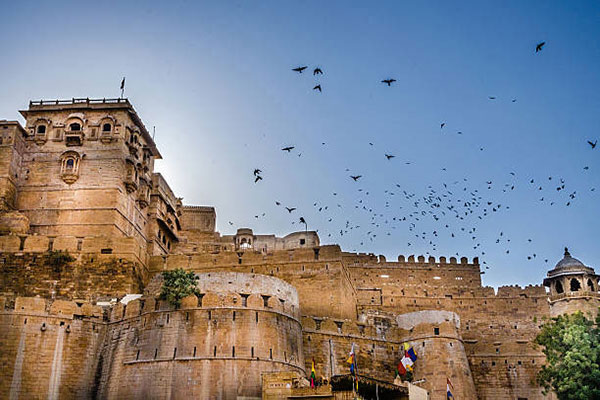
Jaisalmer Fort
With a striking golden structure that can be seen from miles around, Jaisalmer fort is the landmark of the city. This fort is unique as it is one of the only lived in forts in the world. The towering sandstone walls encompass not only homes but shops, restaurants, temples and even hotels.Despite these modern developments, the fort retains all the feels of a medieval city.And walking among the castle walls will have you feeling like you’ve stepped back in time.
Exploring the fort is one of the historical things you can do in the golden city and you never know where the labyrinth of alleyways might lead you.Laid within in the fort are cool rooftop bars, epic viewpoints of the cities, talented artisans, or eerie fortune tellers.Furthermore, it is completely free to enter. This is quite a selling point considering most attractions in Rajasthan come with a steep price tag attached.
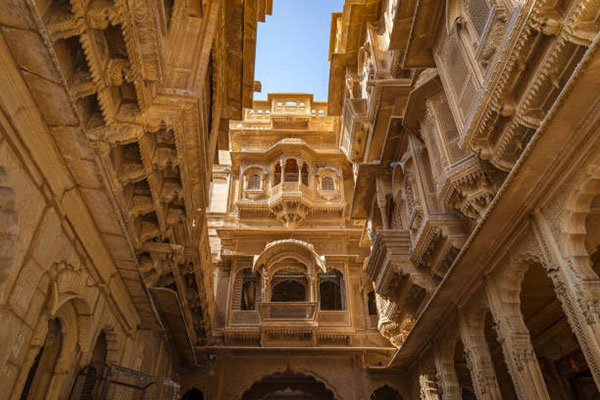
Havelis
Step into the golden past of Jaisalmer by exploring its iconic havelis, architectural masterpieces carved from yellow sandstone. Built by wealthy merchants and nobles, these havelis showcase exquisite jharokhas, detailed facades, lattice windows, and artistic interiors that reflect the city’s rich cultural and royal heritage.
Famous havelis like Patwon Ki Haveli, Salim Singh Ki Haveli, and Nathmal Ki Haveli narrate stories of prosperity, craftsmanship, and timeless elegance. Walking through these historic homes offers a captivating glimpse into traditional Rajasthani lifestyle, making them a must-visit experience for history lovers and architecture enthusiasts alike.
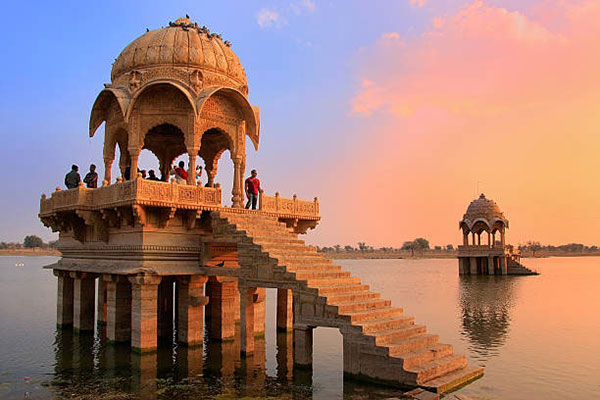
Gadisar Lake
Gadisar Lake is one of the most picturesque and historically significant attractions in Jaisalmer. Built in the 14th century by Maharawal Gadsi Singh, it once served as the lifeline of the city, supplying water to its residents in the heart of the Thar Desert. The lake is beautifully framed by ornate temples, cenotaphs, shrines, and carved sandstone ghats that reflect the rich heritage of Rajasthan.
Today, Gadisar Lake is a peaceful retreat where visitors can enjoy tranquil boat rides, especially enchanting during sunrise and sunset when the golden light shimmers on the water. The surrounding area is also a haven for migratory birds during winter, making it a delightful spot for nature lovers, photographers, and those seeking calm moments amidst Jaisalmer’s timeless charm.
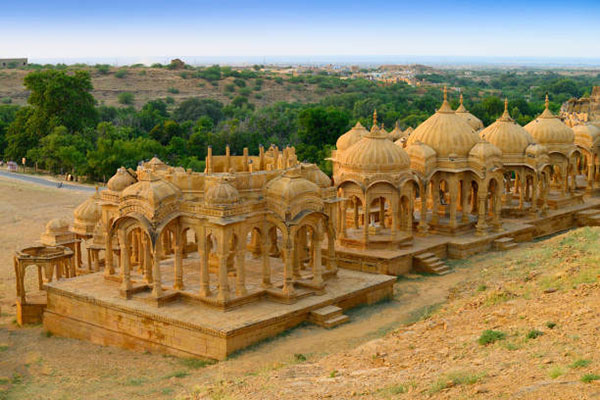
Bada Bagh
Bada Bagh, meaning “Big Garden,” is a historic royal cenotaph complex located a short drive from Jaisalmer. It is renowned for its beautifully carved chhatris built in honor of the Maharajas of Jaisalmer, standing gracefully against the vast desert landscape. Crafted from golden sandstone, these cenotaphs showcase fine Rajasthani architecture and reflect the royal legacy of the region.
The site is especially mesmerizing during sunrise and sunset, when the changing colors of the sky enhance the beauty of the monuments. Calm, open, and steeped in history, Bada Bagh offers visitors a peaceful atmosphere and a glimpse into Jaisalmer’s regal past, making it a must-visit for history lovers and photographers alike.
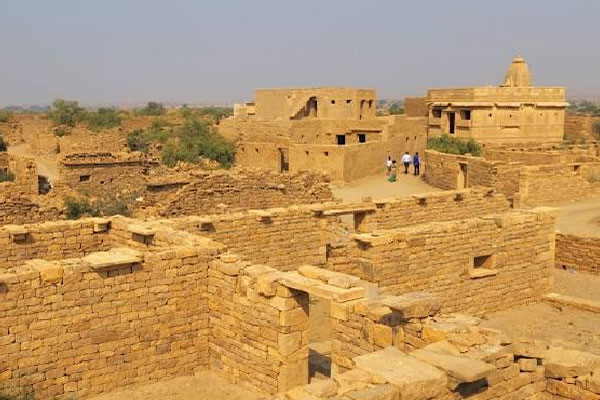
Kuldhara
Lying 17km west of Jaisalmer, Kuldhara has a story. Some 300 years ago, it used to be a prosperous village of Paliwal Brahmins under the state of Jaisalmer. According to the legend, the evil eyes of Salim Singh, the powerful and debauched prime minister of the state, fell on the daughter of the village head and he desired to marry her by force. He threatened the village with grave consequences if they did not adhere to his wish. Instead of submitting to the order of the tyrant, the Paliwals held a council and people of 85 villages left their ancestral homes and vanished. But this was not all; before leaving, they put a curse on Kuldhara that no one will ever be able to settle in their village thereafter. To this date, the village remains barren; left almost the same as its inhabitants had left it centuries ago. It is also said that people who have tried to stay there at night have been chased away by strange paranormal phenomenon.
Another, more plausible reason can be that Salim Singh raised the taxes to such an extent that it became unviable for the local community to survive in the village; and they thus decided to migrate to greener pastures. However, people love the former story; after all, who doesn’t want a tinge of romance and mystery in their tales!.
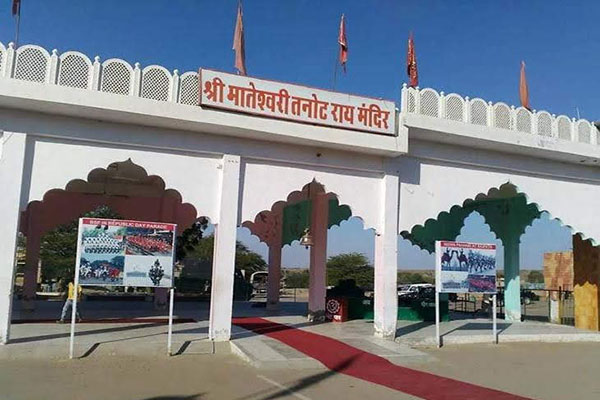
Tannot & Longewala
Tanot Village: Tanot is a small village with a population of about 300 people. It is the last point on that road where an Indian citizen can go without any permit. International Border Pillar, BP 609,is about 15 kms from Tanot and a permit is required from BSF to visit that post. I parked the bike outside the temple complex, and approached to a sentinel, who was maintaining a register of all vehicular movement beyond Tanot towards the border. He also maintained a register for the outsider, who arrived there to visit the temple. I asked him about the permit for BP 609. He informed that nobody was allowed to go there due to some recent issues. It was a big disappointment. But, first I wanted to visit the Tanot Temple, so I went inside the temple premises after making an entry in the visitor’s register.
Longewala: In one hour, I was at Longewala. The BSF bunkers are the only human settlements there. It was the famous battleground of 1971 war, that became a graveyard of Pakistani Tanks, other vehicles and supported machineries. At least 37 Pakistani tanks and 138 vehicles/machinery were destroyed or abandoned in the battle. A T-59 tank, hit by an Indian RCL gun at the same spot, is still there on display with some other vehicles lying around in the sand.

